Structure Health Monitoring

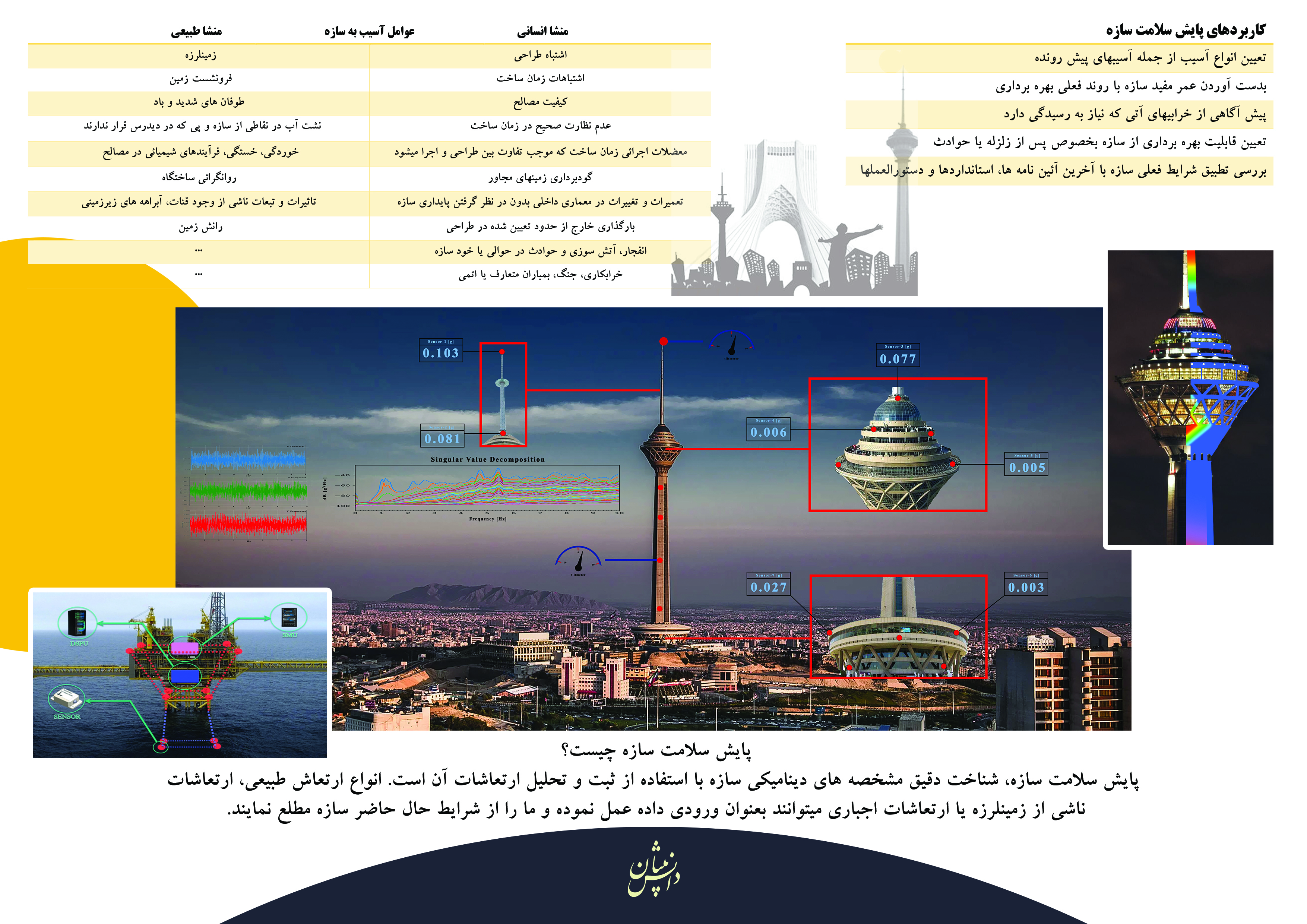
Structural Health Monitoring involves installing multiple highly sensitive vibration sensors at various points of a structure, transmitting the data to a central server, and analyzing it using conventional modal analysis methods, signal processing, and artificial intelligence to assess the real-time condition of the structure and generate outputs that are easily understandable for all stakeholders. These outputs are continuously updated on mobile devices, allowing users to identify healthy sections, damaged areas, and parts requiring minor repairs. At the same time, the software provides detailed information about the structural stability and habitability.The images at the beginning of this page present a conceptual view of data processing for the Jahan Koodak building, while the image below this text shows a real implementation at the Rafsanjan Copper Mine. The green spectrum indicates the structure’s health, and in case of damage, the colors shift to yellow, orange, and red, representing increasing levels of severity.

Equipping high-rise towers, administrative buildings, hospitals, commercial and office centers, malls, and hotels with this system enables real-time awareness of the structure’s condition during a crisis, without the need for emergency evacuation or months-long stability assessments, allowing the best decisions to be made based on the latest structural data.

Given today’s risks, including earthquakes, subsidence, war, explosions, fires, and wear due to aging structures, equipping buildings with advanced sensors and monitoring the results on a mobile device provides a reliable option for decision-making in critical situations, reducing stress and minimizing the arduous efforts associated with emergency evacuations.


Factors Causing Structural Damage

  • Human-Caused Factors

    Design errors
    Construction mistakes

    Material quality issues
    Inadequate supervision during construction
    Prolonged construction periods
    Execution problems during construction causing discrepancies between design and implementation
    Loading beyond code requirements or design limits
    Explosions, fires, or excavation of adjacent lands
    Repairs or interior architectural changes without considering structural stability
    Vandalism, war, conventional or nuclear bombing in or near the structure
    Minor damages that, over time, lead to progressive failure and serious structural harm


  • Natural Factors

    Earthquakes
    Land subsidence

    Storms and strong winds
    Water leakage in hidden parts of the structure
    Corrosion, fatigue, chemical processes in materials, concrete cancer
    Soil liquefaction
    Impacts and consequences of underground aqueducts or waterways
    Landslides

Advantages of Implementing a Structural Health Monitoring System

  • Enhancing public safety
    Increasing insurability of structures
    Optimizing maintenance and repair costs
    Generating analytical data for strategic decision-making
    Determining usability of structures, especially after earthquakes or incidents
    Identifying different types of damage, including progressive damage in early stages
    Detecting any anomalies in the structure
    In under-construction buildings, validating design assumptions and ensuring project progress aligns with client expectations
    Verifying compliance of the current structural condition with the latest codes, standards, and guidelines
    Providing early warnings of future failures requiring attention and developing operational plans for preventive maintenance
    Estimating the service life of the structure under current usage conditions for future planning and calculating depreciation or major repair costs

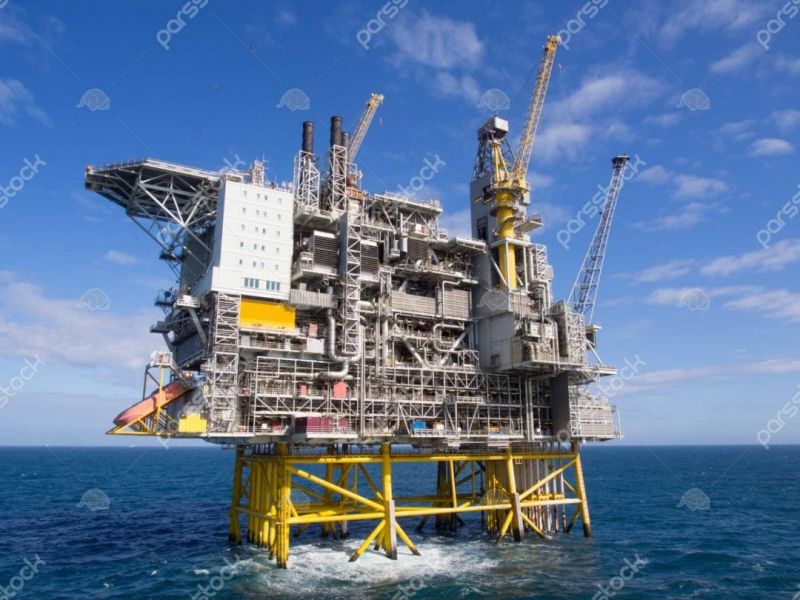
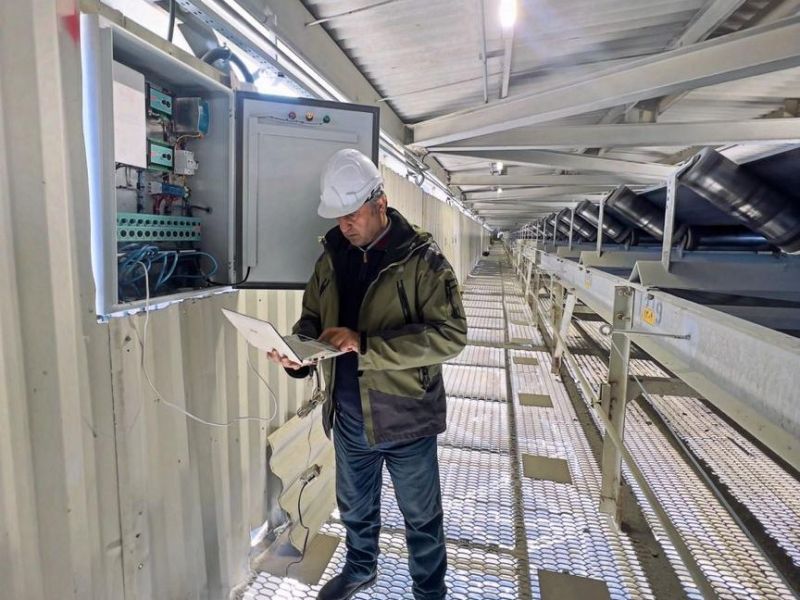
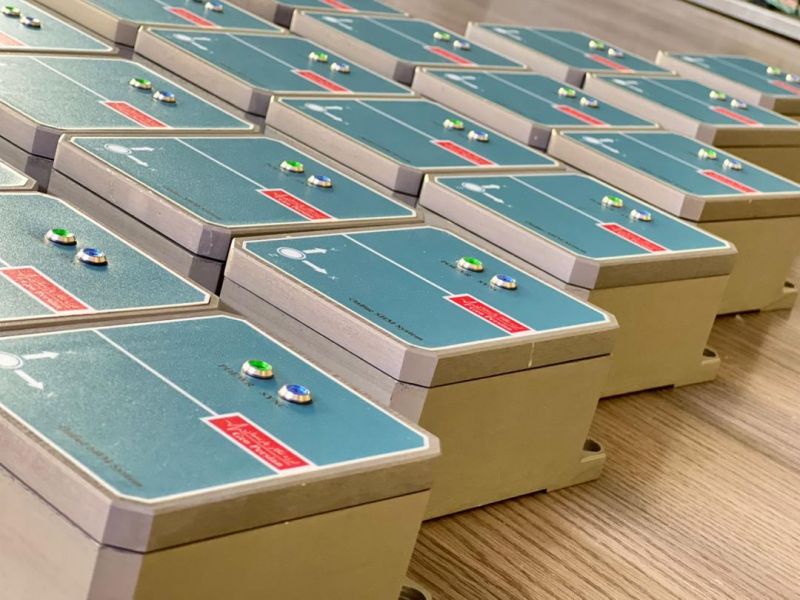
Offshore oil platforms are exposed to erosion caused by corrosion, fatigue, and stresses related to harsh weather conditions and massive sea waves. These platforms are of two types: some extend down to the seabed, constructed directly on the ocean floor and rising tens of meters above sea level, while others are floating structures stabilized by anchoring to the seabed or mooring. All types of offshore platforms are vulnerable to environmental damage, making continuous structural health monitoring essential.Traditionally, inspection methods have relied on visual observation, which is not only labor-intensive but also lacks accuracy, and updating models based on field observations carries a high degree of uncertainty.In 2025, Geopersian Seismography Co. entered into a research contract with the Iranian Offshore Oil Company to undertake structural analysis of platforms, identify damage locations, and determine the extent of damage. This phase of the project demonstrates the capability of modal and vibration analysis methods in assessing the current condition of offshore platforms.The next phase involves equipping platforms with advanced vibration sensors, transferring data to a central server, and applying artificial intelligence and machine learning techniques, enabling the engineering department of the oil company to have real-time access to precise structural health information at all times.The images above show the contract signing with the Iranian Offshore Oil Company and the unveiling of a high-dynamic-range accelerometer developed by Geopersian Seismography Co. during the Oil Industry Exhibition in May 2025.

Services

  • Research and Development for Advanced Technology Production

  • Data Acquisition from Physical Phenomena and Processing

  • Production of Various High-Precision Sensors and Data Loggers

  • Production of Monitoring Systems Based on Advanced Technologies

Contact Us

  • Tel : + 98 21 860 950 42

  • FAX : +98 21 860 939 83 

  • phone : +98 912 138 48 68

  • Email : info@geopersian.com

  • Email : sencidence.geo@gmail.com

  • No: 26 ,4th Ave ,North Kargar Street ,Tehran ,Tehran Province